Canoe Sprint
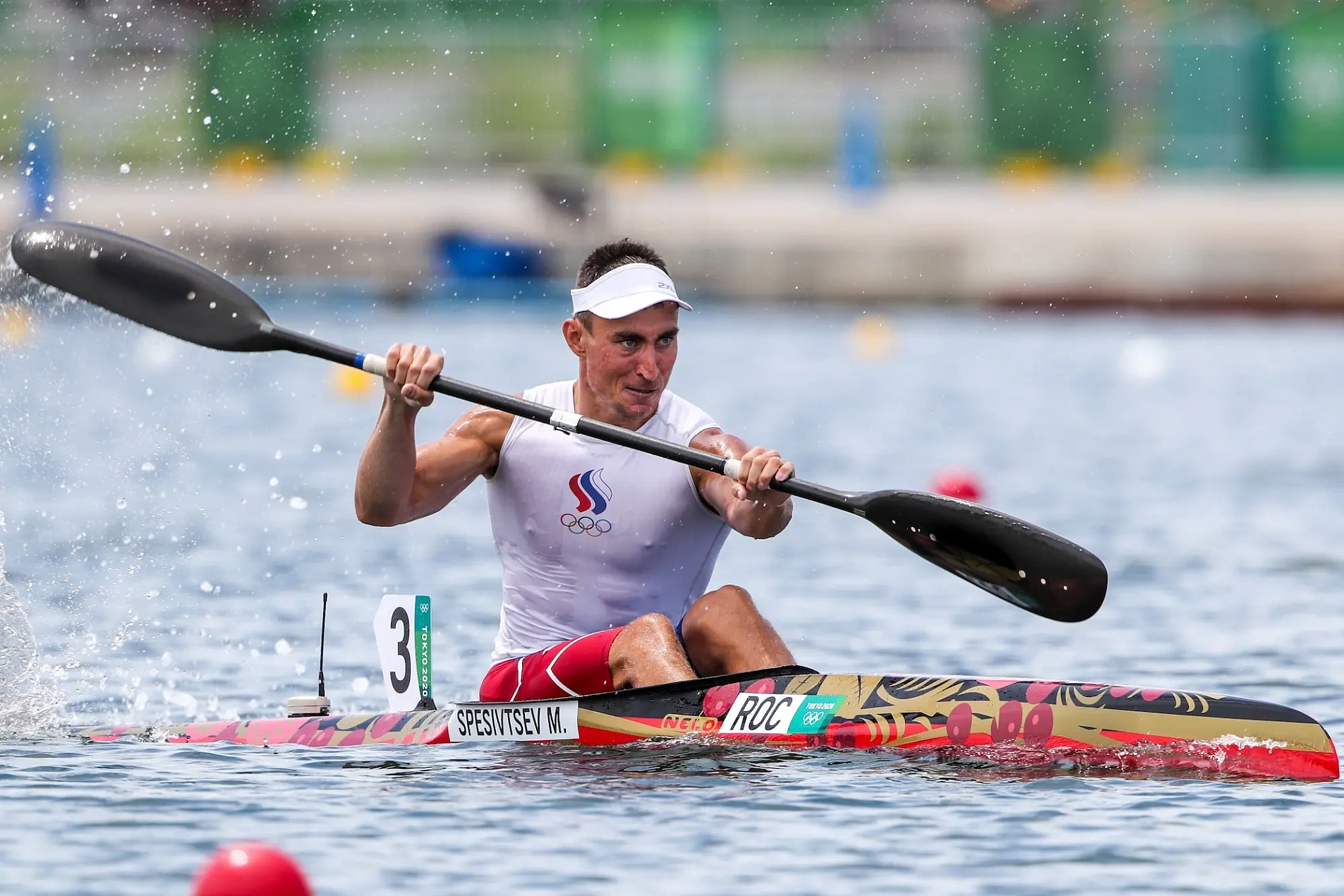
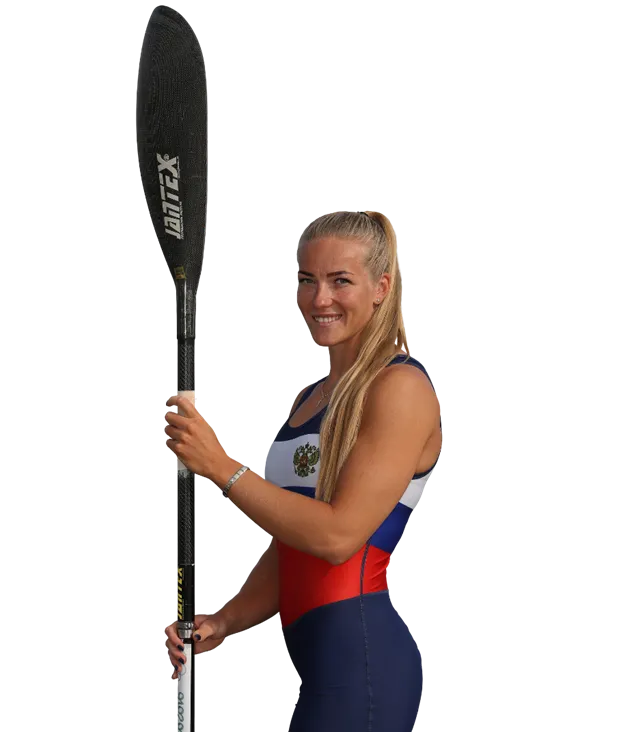
In kayak events, athletes paddle in a seated position using a double-bladed paddle, alternating strokes on each side of the boat.
In canoe events, athletes paddle with a single-bladed paddle while kneeling on one knee.
Since strokes in canoe are performed on one side only, a canoe single would naturally turn in a circle. Therefore, athletes must perform a complex steering stroke at the end of each movement to keep the boat moving straight. Kayaks are equipped with a rudder under the stern to help maintain direction.
Men and women compete in both kayak and canoe events. Athletes race in:
-
Singles (one athlete in the boat)
-
Crew boats: doubles and fours
In canoe doubles, partners usually paddle on opposite sides.
Disqualification Cases
Athletes are disqualified in the following situations:
-
Crossing the lane boundary
-
Two false starts by the same crew
-
The boat weighing less than the minimum required weight after post-finish control
Minimum Boat Weights
-
Kayak single (K-1) – 12 kg
-
Canoe single (C-1) – 14 kg
-
Kayak double (K-2) – 18 kg
-
Canoe double (C-2) – 20 kg
-
Kayak four (K-4) – 30 kg
-
Canoe four (C-4) – 30 kg
Interesting Fact
The most legendary kayaker in history is German athlete Birgit Fischer. She competed in six Olympic Games and won 8 gold and 3 silver medals. She is also a 30-time world champion.
Across the Olympic Games, World Championships, and European Championships, she won 50 medals in total (38 gold, 10 silver, 2 bronze), making her the most decorated female kayaker of all time. Her name is listed in the Guinness World Records: her first title came in 1979, and her last in 2004.
Olympic Games
Canoe sprint was first included in the Olympic program at the 1936 Summer Olympics. Initially, only men competed in singles and doubles events.
Women’s kayak events were introduced at the 1948 Summer Olympics.
The Olympic program includes races over 200 m, 500 m, and 1000 m in singles, doubles, and kayak fours. While more than 25 medal events are contested at World and European Championships, the Olympic program includes 12 events and may change between Games.
For example, at the 2020 Summer Olympics, several men’s events were replaced by women’s canoe events, and women’s canoe races were officially added to the program.
In Tokyo, 6 medal events were contested for men and 6 for women:
|
Men |
Women |
|
Kayak single (K-1) 200 m
Kayak single (K-1) 1000 m Kayak double (K-2) 1000 m Kayak four (K-4) 500 m Canoe single (C-1) 1000 m Canoe double (C-2) 1000 m |
Kayak single (K-1) 200 m
Kayak single (K-1) 500 m Kayak double (K-2) 500 m Kayak four (K-4) 500 m Canoe single (C-1) 200 m Canoe double (C-2) 500 m |
At the Olympic Games, athletes compete in 8 lanes, each 9 meters wide, separated by buoys. All events include heats and semifinals before the final.
Russia
Kayak racing became popular in the USSR in the 1930s. Soviet paddlers first competed at the 1952 Summer Olympics.
A major contribution to the development of the national team was made by coach Nil Savin, who trained three-time Olympic champion Lyudmila Pinaeva.
The first Soviet Olympic champions in canoe sprint (1956) were:
-
Elizaveta Dementyeva (K-1)
-
Gratsian Botev and Pavel Kharin (C-2 10,000 m)
The greatest Olympic success for Soviet paddlers came at the 1972 Summer Olympics and the 1976 Summer Olympics, where they won six of seven gold medals.
Among three-time Olympic champions were Vladimir Morozov, Sergey Chukhrai, and Vladimir Parfenovich.
The first Olympic medal in the history of modern Russia was won by the K-4 crew (Tishchenko, Gorobiy, Verlin, Tsybulnikov), who took bronze in the 1000 m race at the 1996 Summer Olympics.
The first Olympic champion in canoe sprint in modern Russian history was Maxim Opalev, who won gold in C-1 500 m at the 2008 Summer Olympics. He holds a complete set of Olympic medals (gold 2008, silver 2000, bronze 2004).
In 2012, Yury Postrigay and Alexander Dyachenko won Russia’s first Olympic gold in kayak, dominating the K-2 200 m final.
Currently, the most decorated Russian paddler is Ivan Shtyl, bronze medalist at the 2012 Summer Olympics, 14-time world champion and 12-time European champion.
From 1936 to 2016, athletes from the USSR and Russia won a total of 32 Olympic gold medals in canoe sprint.
Our Olympians