
Athletics
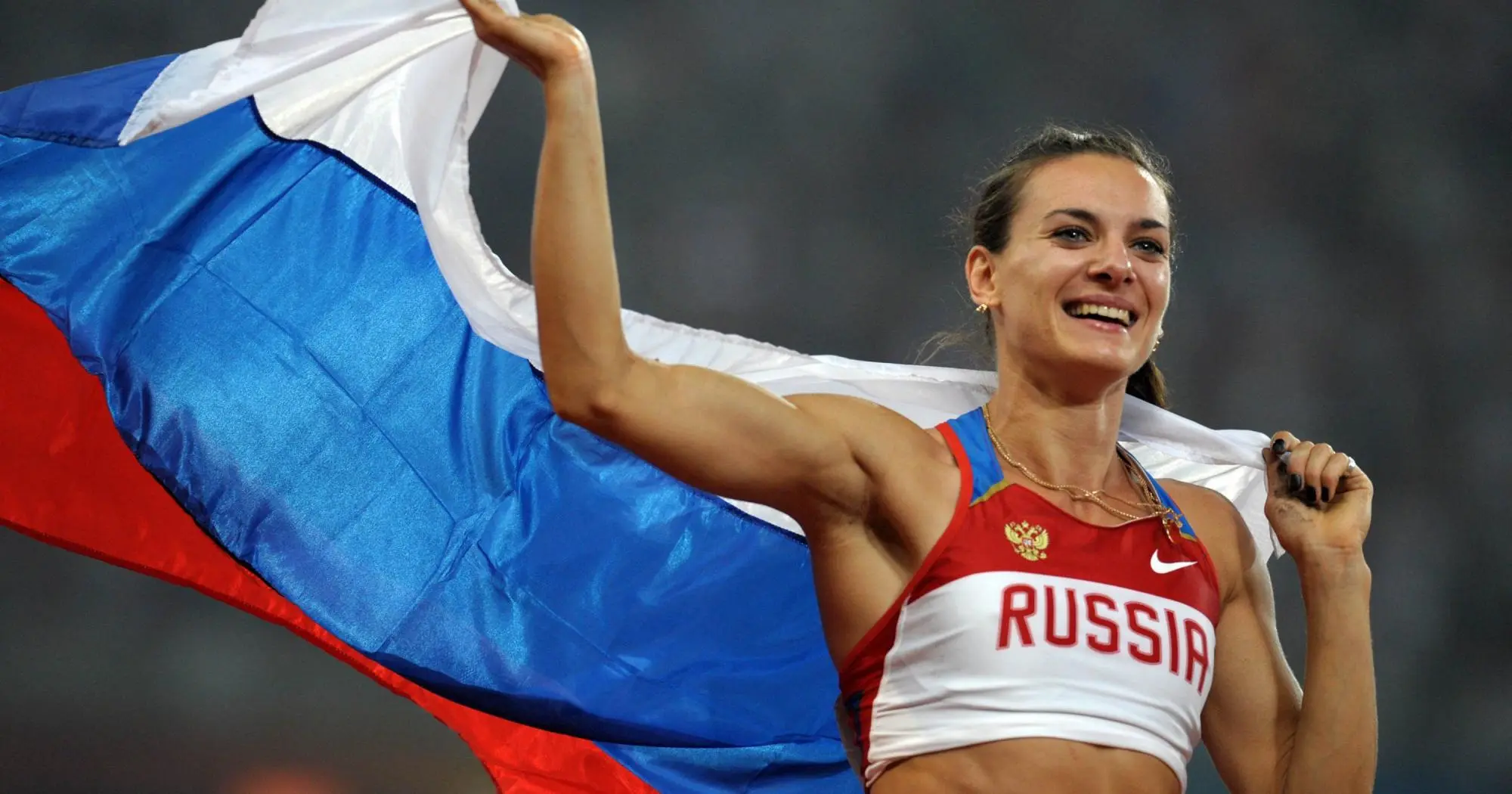
Athletics is an Olympic sport that includes running, walking, jumping, and throwing.
Athletes compete in running events of 100, 200, 400, 800, 1500, 5000, and 10,000 meters, the marathon (42 km 195 m), hurdle races of 110 meters (100 meters for women) and 400 meters, steeplechase — a 3000-meter race with obstacles, race walking over 20 and 50 km (men only), high jump, pole vault, long jump and triple jump, shot put, discus throw, hammer throw, javelin throw, and combined events — decathlon for men and heptathlon for women.
The men's competition program has remained unchanged for several decades, while new women's events have gradually been added. In 1996 in Atlanta, the running distance was increased from 3000 to 5000 meters, and in 2000 in Sydney, pole vault and hammer throw became Olympic events. In 2008, the women's steeplechase (3000-meter run with obstacles) also became an Olympic event – leaving almost no differences between men's and women's competitions. For men, the program differs by just one event: the 50 km race walk.
Interestingly
Ray Ewry, an American who won 8 gold medals in standing jump events at three Olympic Games (this event used to be Olympic), was almost disabled as a child – he had polio and spent some time in a wheelchair. However, he started practicing jumps to strengthen his legs, which eventually led him to Olympic gold.
Olympic Games
Athletics competitions appeared at the First Olympic Games in 1896 in Athens. Until 1928 (the Games in Amsterdam), only men competed in athletics. Currently, the Summer Olympic Games program includes 47 athletics events — 24 for men and 23 for women.
Russia
After the very first event at the 1952 Helsinki Olympics – the women's discus throw – the entire podium was taken by representatives of the USSR. The Soviet women's athletics team turned out to be the best at these Games – its members won as many medals as the athletes from West Germany, Australia, Great Britain, and the USA combined. Since then, Russian athletes have never returned home from the Olympics without a medal. The most decorated Russian athletes are: Tamara Press — 3 gold and 1 silver medal, Tatyana Kazankina — 3 gold, Nina Ponomareva — 2 gold and 1 bronze, Vladimir Kuts, Viktor Markin, Svetlana Masterkova, and Yelena Isinbayeva — 2 gold medals each, and Galina Zybina, Nadezhda Chizhova, and Tatyana Lebedeva — a complete set of Olympic medals with one gold, one silver, and one bronze each. Irina Privalova has four Olympic medals — one gold, one silver, and two bronze.
Our Olympians